


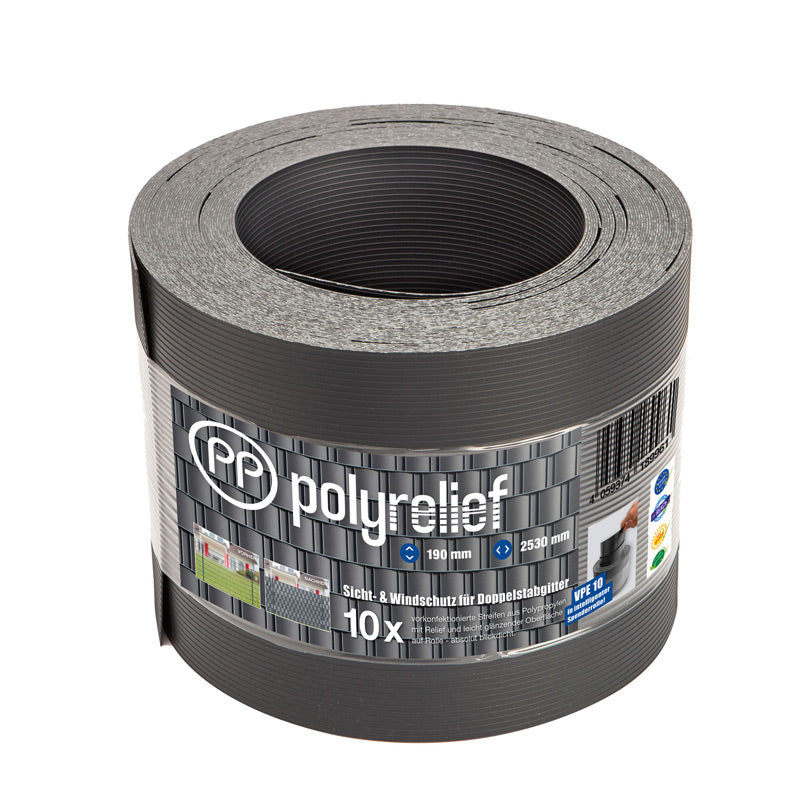
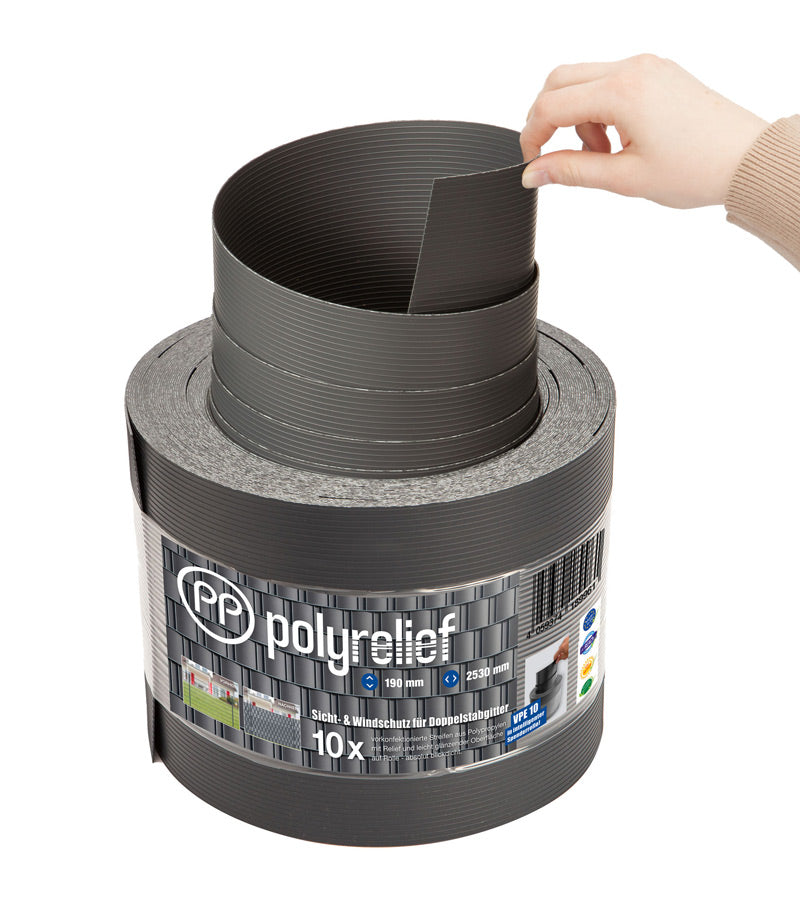
polyrelief PP Privacy Screen Strips, Set of 10, 190 x 2530 mm
Color
Parcel or freight item: plus shipping, free shipping within Germany from €1,000 Shipping info
Spedition/Paketdienst mit Terminankündigung (Avis)
Sie erhalten Ihr Angebot als PDF per E-Mail – in der Regel sofort. Produkt, Ausführung und Menge übernehmen wir unverändert.
Wir haben Ihre Anfrage aufgenommen. Das Angebot erreicht Sie gleich per E-Mail – schauen Sie bitte auch im Spam-Ordner nach.
- Service & Beratung
- Kauf auf Rechnung (B2B)
- Fachbetrieb seit 1955
- Sichere Bestellung mit Käuferschutz


Choose options
Color
Parcel or freight item: plus shipping, free shipping within Germany from €1,000 Shipping info
Spedition/Paketdienst mit Terminankündigung (Avis)
Sie erhalten Ihr Angebot als PDF per E-Mail – in der Regel sofort. Produkt, Ausführung und Menge übernehmen wir unverändert.
Wir haben Ihre Anfrage aufgenommen. Das Angebot erreicht Sie gleich per E-Mail – schauen Sie bitte auch im Spam-Ordner nach.
- Service & Beratung
- Kauf auf Rechnung (B2B)
- Fachbetrieb seit 1955
- Sichere Bestellung mit Käuferschutz
Color
Parcel or freight item: plus shipping, free shipping within Germany from €1,000 Shipping info
Spedition/Paketdienst mit Terminankündigung (Avis)
Sie erhalten Ihr Angebot als PDF per E-Mail – in der Regel sofort. Produkt, Ausführung und Menge übernehmen wir unverändert.
Wir haben Ihre Anfrage aufgenommen. Das Angebot erreicht Sie gleich per E-Mail – schauen Sie bitte auch im Spam-Ordner nach.
- Service & Beratung
- Kauf auf Rechnung (B2B)
- Fachbetrieb seit 1955
- Sichere Bestellung mit Käuferschutz
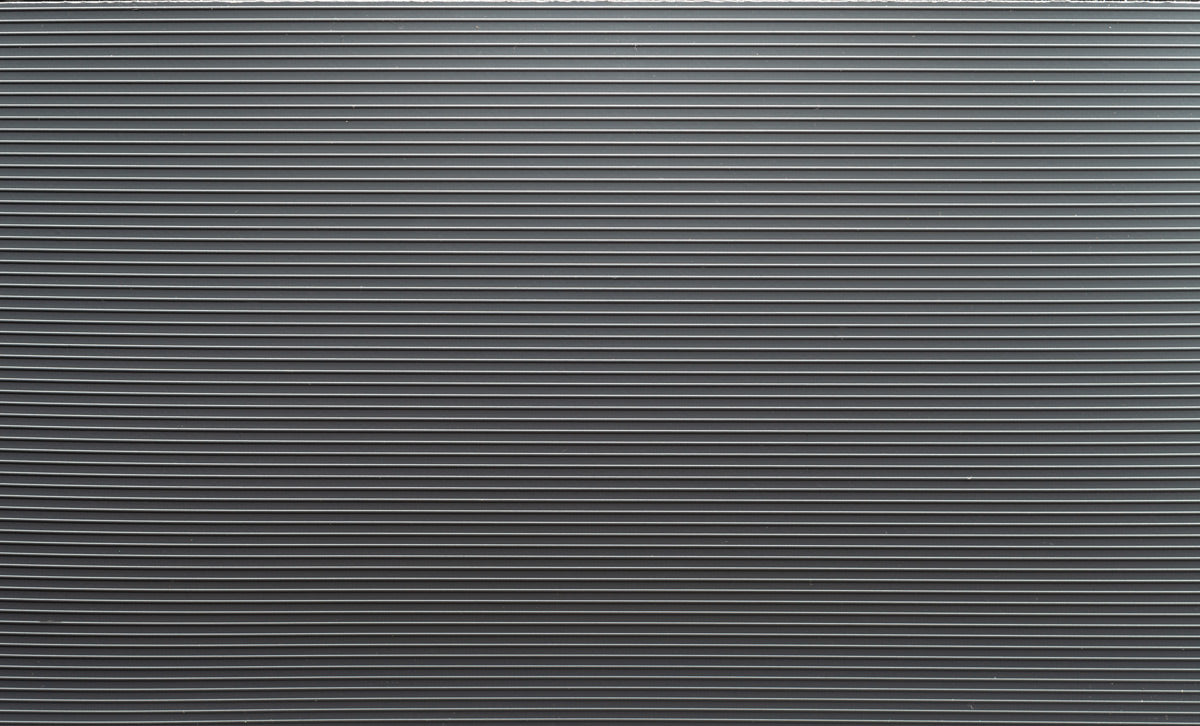
polyrelief Privacy Screen Strips – Relief Embossing Instead of a Flat Surface
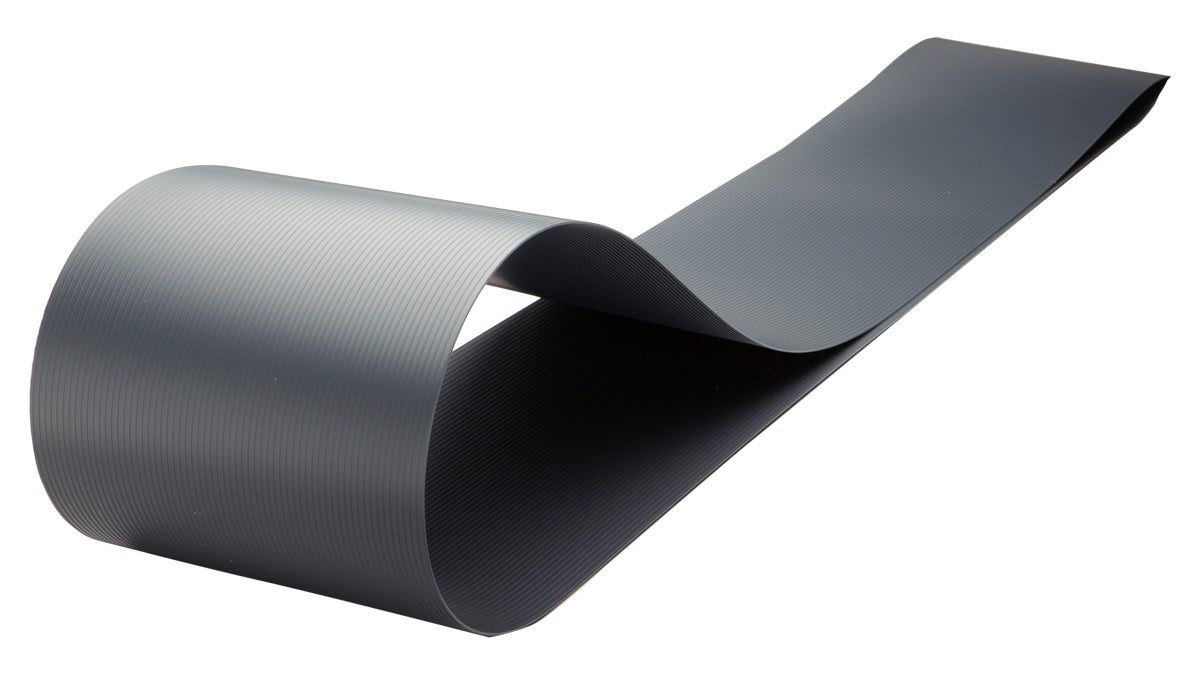
The surface is finely ribbed lengthwise. That sounds like a detail, but it decides how the fence looks in the sun: a smooth surface reflects and shows every dent, while a ribbed one breaks up the light and stays calm. Delivered as ten pre-cut strips in a dispenser roll.
Technical Data
- Contents: 10 strips per roll
- Strip length: 2530 mm (+7/-5 mm)
- Strip height: 190 mm (+/-1 mm)
- Material thickness: approx. 1.25 mm
- Coverage: approx. 0.5 m² per strip
- Material: polypropylene (PP)
- Colors: similar to anthracite gray, window gray, moss green
Store Dry
The manufacturer points out explicitly that the goods must be stored dry. Trapped moisture inside the package can leave stains on the material if it is kept outdoors. So: put the package in the garage, not out in the rain next to the job site.
Plan for Clamping Rails
As with all stiffer strips, the material springs back at the ends. One clamping rail per end of run holds it permanently in place – available under Clamping Rails & Privacy Screen Accessories.
Manufacturer:
Kirchberger Metall Onlinevertrieb GmbH
Neunburger Str. 2c
92431 Neunburg v. W. / Seebarn
Germany
Contact:
Email: shop@kirchberger-metall.de
Telephone: +49 (0) 9672 9269110


