


Corten Steel Raised Bed Custom Made with Snail Protection Edge – External Flange, Welded
Length in cm
Width in cm
Height in cm
Kostenfreier Versand Versandinfos
Spedition/Paketdienst mit Terminankündigung (Avis)
Sie erhalten Ihr Angebot als PDF per E-Mail – in der Regel sofort. Produkt, Ausführung und Menge übernehmen wir unverändert.
Wir haben Ihre Anfrage aufgenommen. Das Angebot erreicht Sie gleich per E-Mail – schauen Sie bitte auch im Spam-Ordner nach.
- Service & Beratung
- Kauf auf Rechnung (B2B)
- Fachbetrieb seit 1955
- Sichere Bestellung mit Käuferschutz


Choose options
Length in cm
Width in cm
Height in cm
Kostenfreier Versand Versandinfos
Spedition/Paketdienst mit Terminankündigung (Avis)
Sie erhalten Ihr Angebot als PDF per E-Mail – in der Regel sofort. Produkt, Ausführung und Menge übernehmen wir unverändert.
Wir haben Ihre Anfrage aufgenommen. Das Angebot erreicht Sie gleich per E-Mail – schauen Sie bitte auch im Spam-Ordner nach.
- Service & Beratung
- Kauf auf Rechnung (B2B)
- Fachbetrieb seit 1955
- Sichere Bestellung mit Käuferschutz
Length in cm
Width in cm
Height in cm
Kostenfreier Versand Versandinfos
Spedition/Paketdienst mit Terminankündigung (Avis)
Sie erhalten Ihr Angebot als PDF per E-Mail – in der Regel sofort. Produkt, Ausführung und Menge übernehmen wir unverändert.
Wir haben Ihre Anfrage aufgenommen. Das Angebot erreicht Sie gleich per E-Mail – schauen Sie bitte auch im Spam-Ordner nach.
- Service & Beratung
- Kauf auf Rechnung (B2B)
- Fachbetrieb seit 1955
- Sichere Bestellung mit Käuferschutz
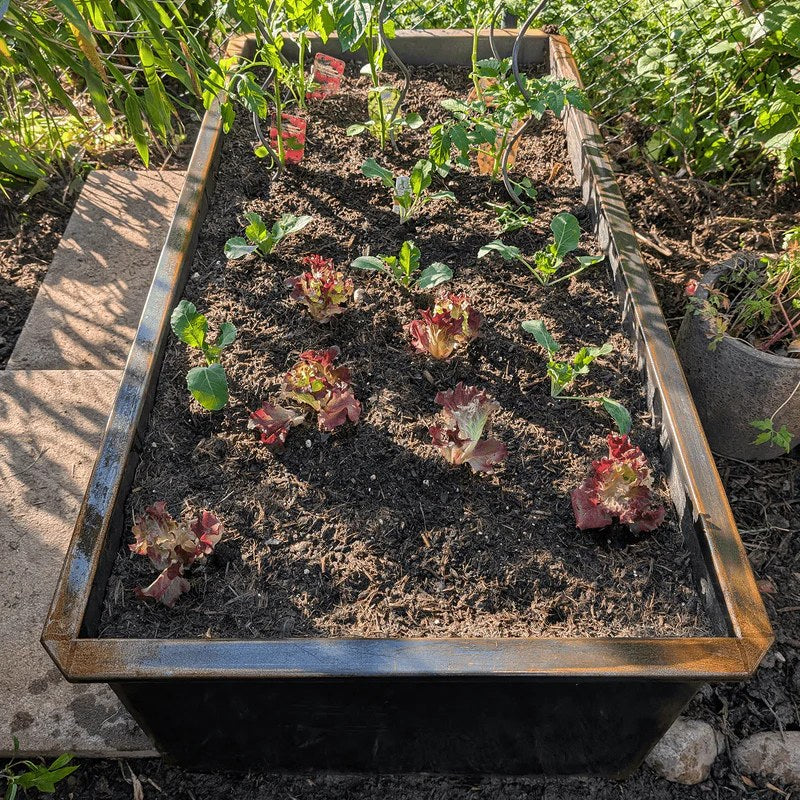
Corten Steel Raised Bed with Slug-Guard Edge – Made to Measure, Welded All Around
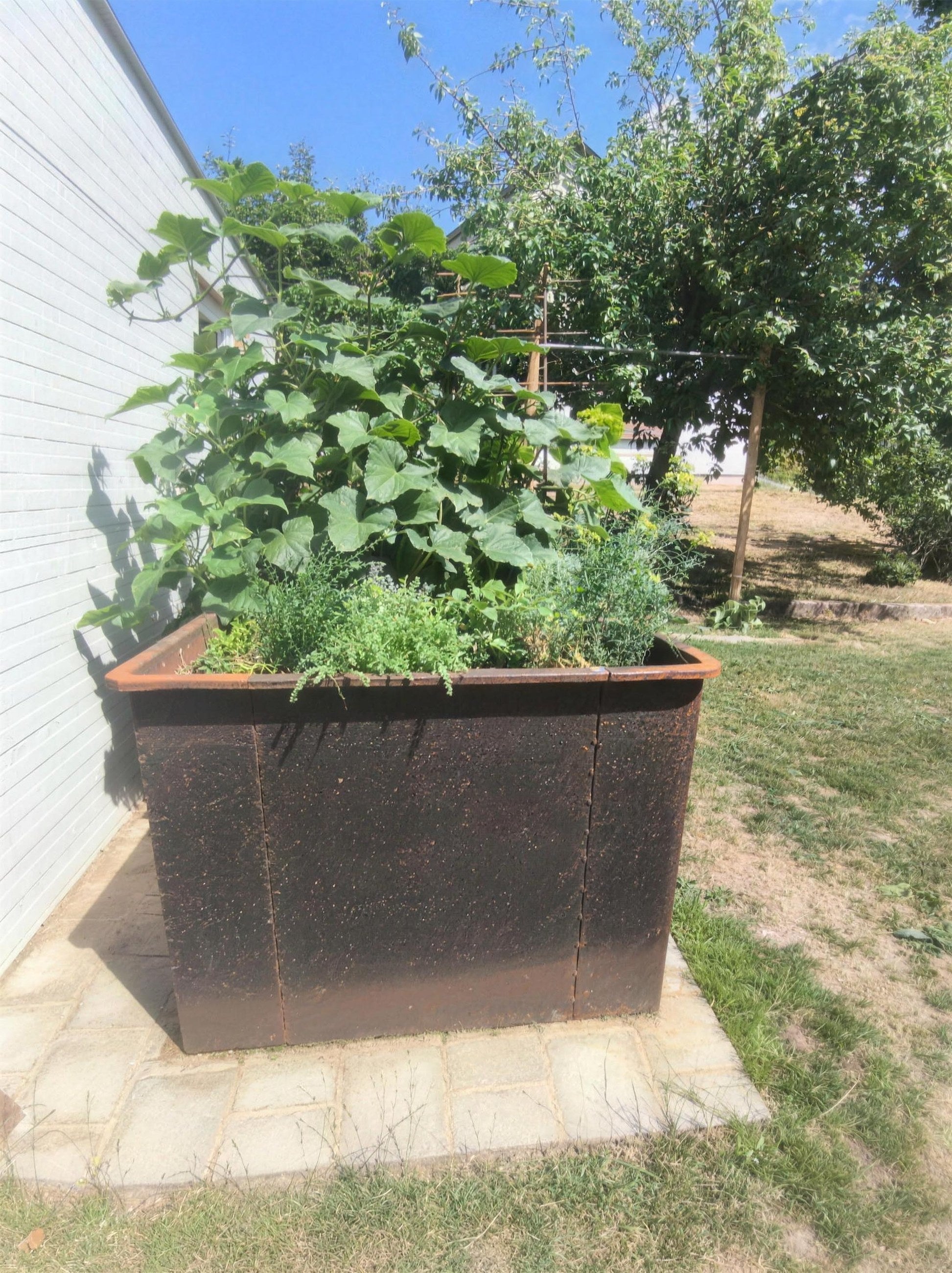
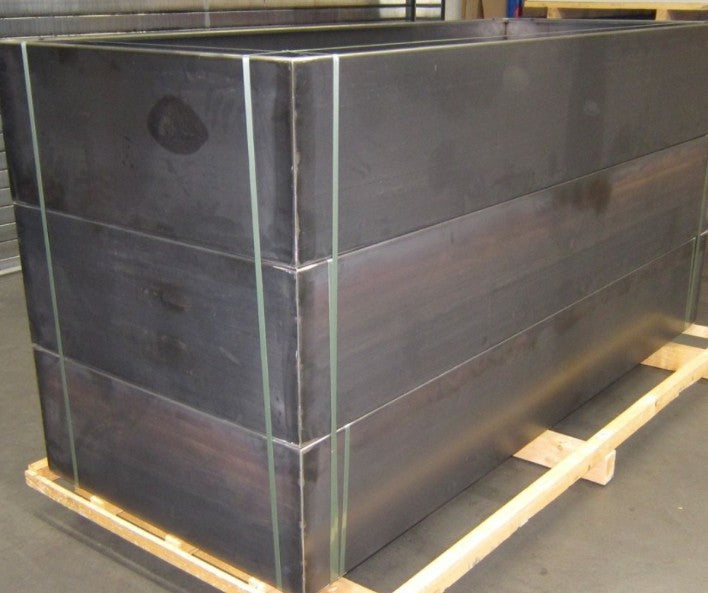
This rectangular raised bed is made of genuine Corten steel and is manufactured to your chosen dimensions – as a single component welded at all four corners. The difference from our standard model: here the top edge is folded outward and therefore acts as a built-in slug guard. There are no bolted edges, no visible joints and nothing to assemble: unpack, position, fill.
Guide tip: You will find everything about planning, choosing dimensions, layered filling, planting and patina care in our comprehensive Corten steel raised bed guide.
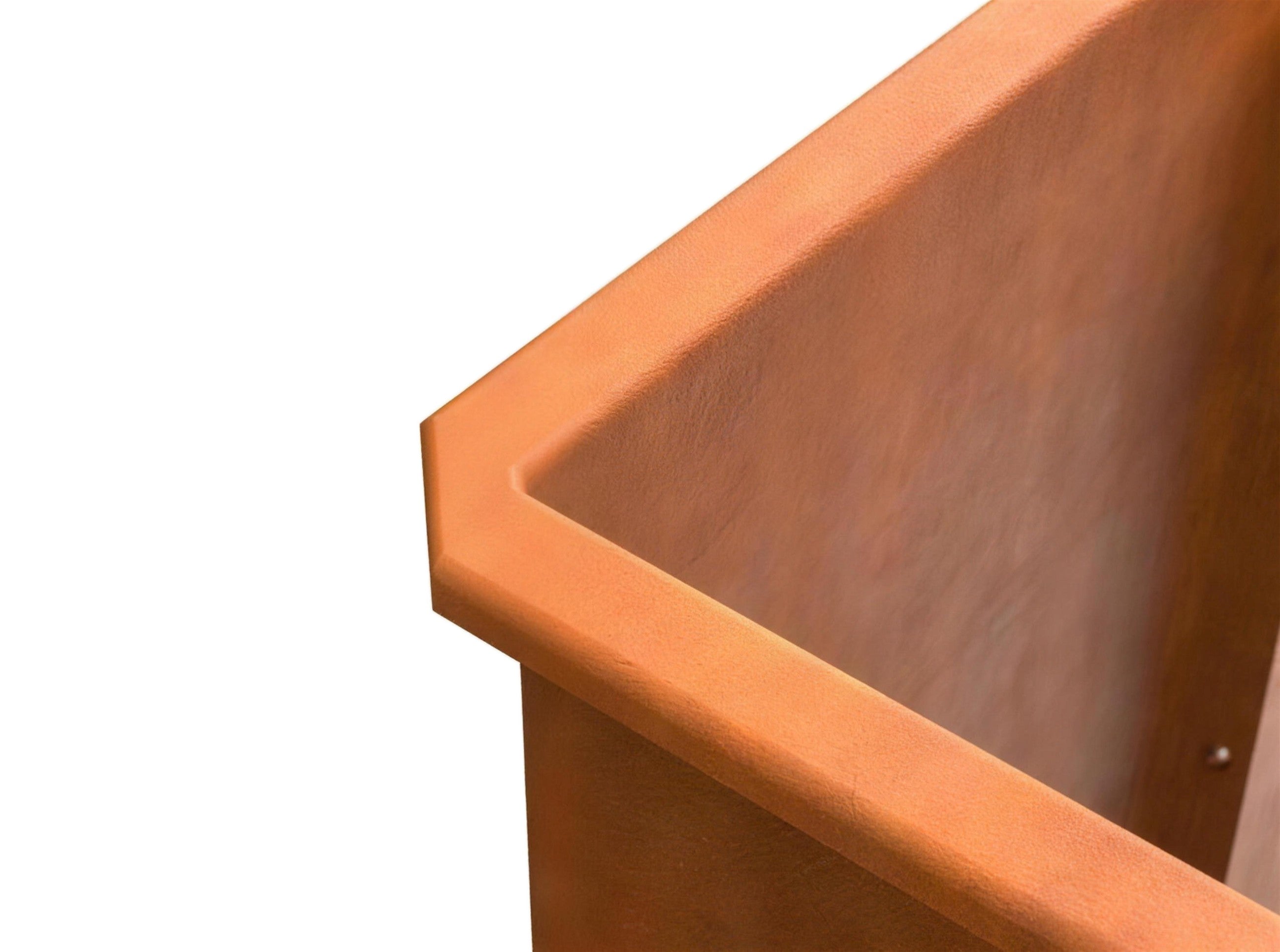
Slug guard as standard: the outward-folded top edge
On this model, the double-folded top edge is turned outward. This creates an overhanging obstacle for slugs and snails: on their way up they would have to cross the edge upside down – a mechanical barrier that effectively protects lettuce, vegetables and young plants, entirely without slug pellets or chemicals. As a bonus, the outward fold gives a stronger, more technical look and provides a small ledge to lean on while planting and tending the bed.
Your dimensions, in 10 cm increments
You can combine length, width and height freely – each in 10 cm increments:
- Length: 40 to 240 cm
- Width: 40 to 120 cm
- Height: 40 to 110 cm
That adds up to over 1,200 size combinations with a planting volume of roughly 64 to 3,168 liters – from a narrow bed for the balcony to a large growing bed. Please note: the width cannot be greater than the length. If you need an intermediate size or a different shape, we can produce it as a custom item – just get in touch.
Sheet thickness: we size it for you
You do not have to select the material thickness yourself. We derive it from the length of your bed, because the soil pressure on the side walls increases with the length:
- 40 to 70 cm length: 2 mm
- 80 to 140 cm length: 3 mm
- 150 to 190 cm length: 4 mm
- 200 to 240 cm length: 5 mm
The price for each size combination already includes the appropriate sheet thickness – there is no surcharge.
Construction
As standard, the top edge is double-folded and turned outward – it stiffens the body, forms the slug-guard edge and at the same time serves as a support while you work. Its dimensions scale with the sheet thickness: 2 mm sheet gets 30 × 20 mm, 3 mm sheet 40 × 25 mm, 4 mm sheet 45 × 35 mm and 5 mm sheet 60 × 40 mm (width × height). With the heavier sheets the edge therefore projects further – so the slug guard is correspondingly more pronounced on large beds. At the bottom, a single 30 mm fold ensures a stable stance and edge protection. Inside, a horizontal stiffening profile prevents the side walls from bulging outward under soil and root pressure.
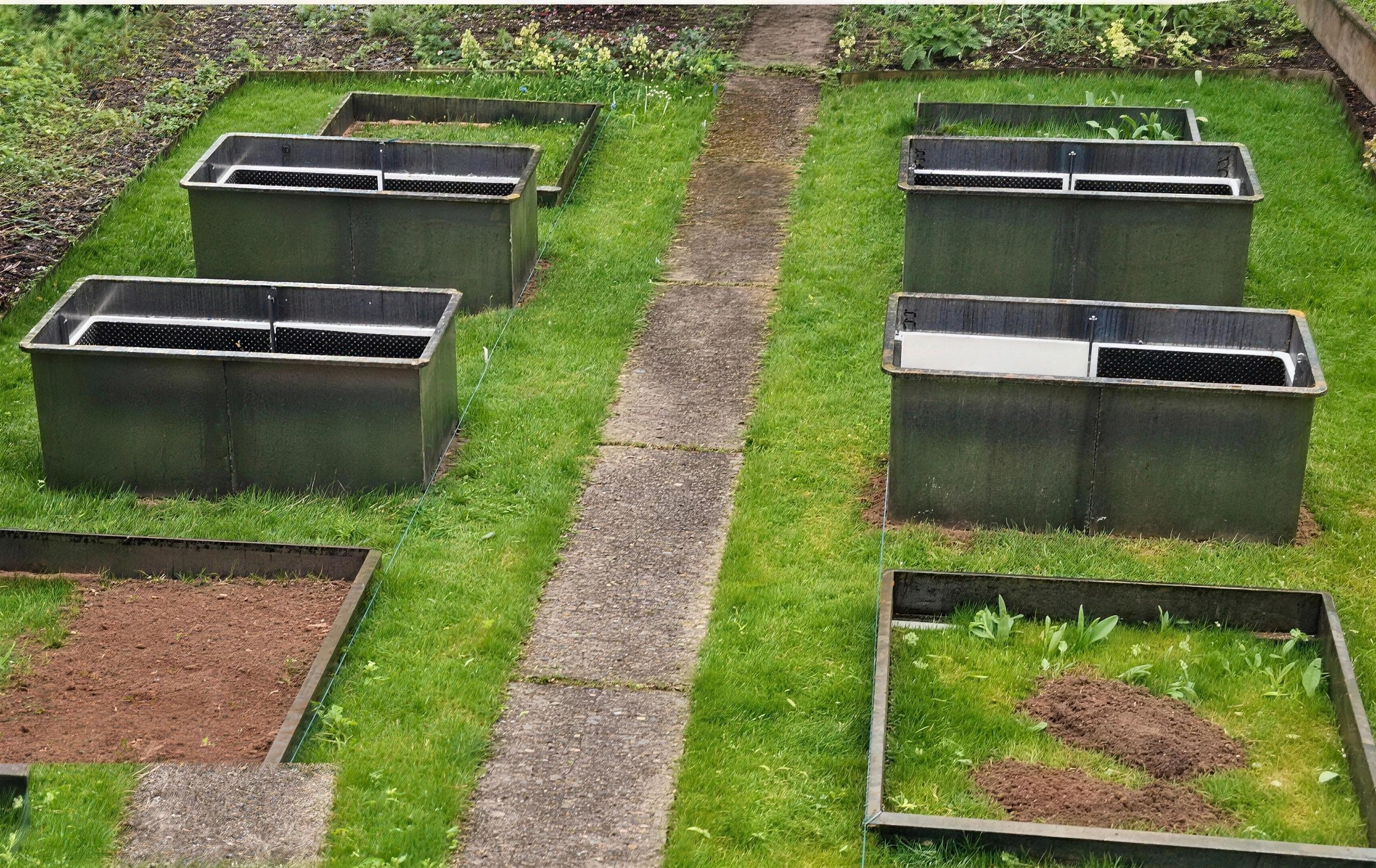
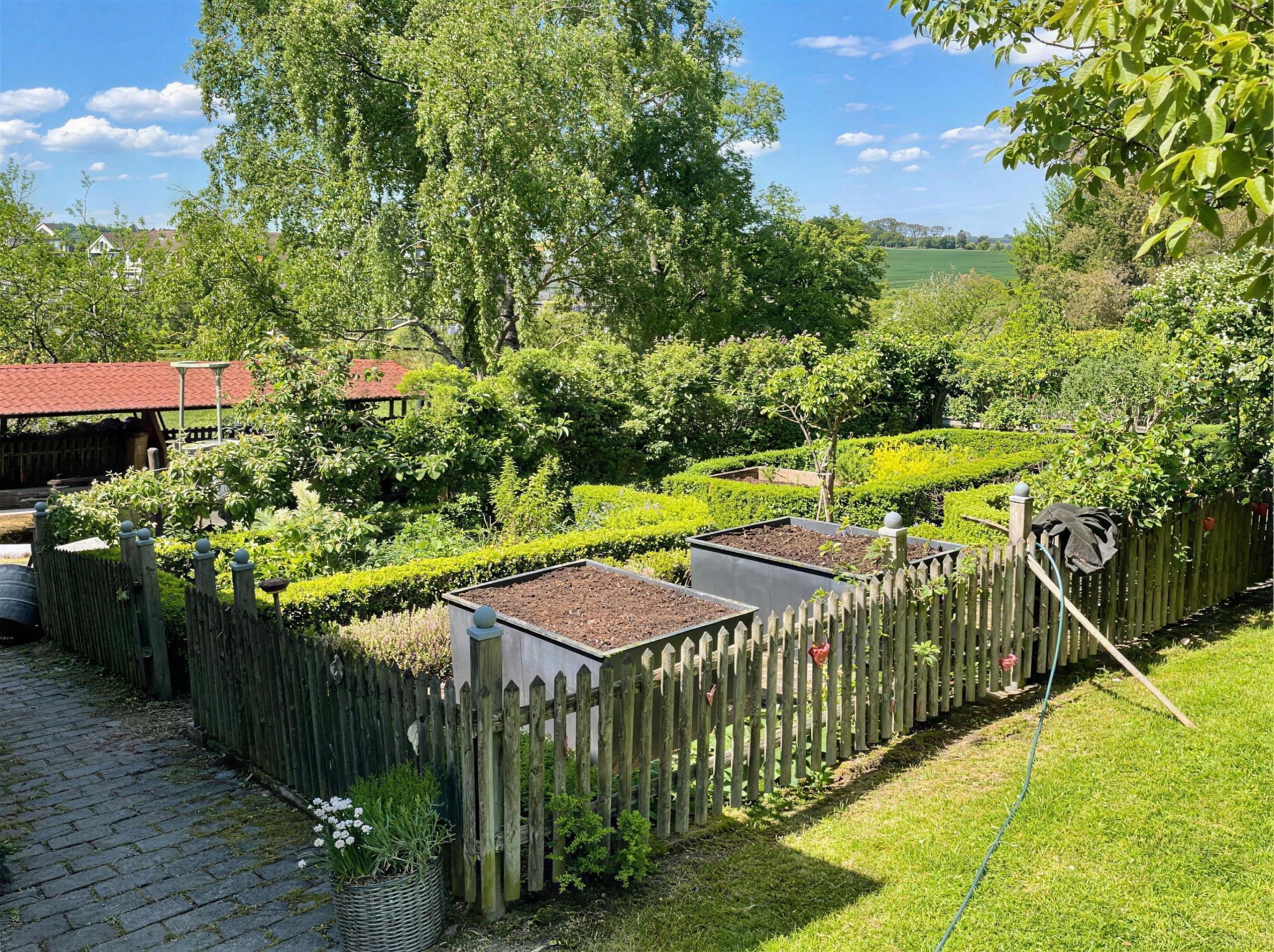
All raised beds are manufactured without a base as standard and therefore sit in open contact with the ground. This is ideal for lawns and garden soil: rainwater drains away and soil organisms and earthworms migrate in from below. The bed can also be placed on solid surfaces such as a terrace or balcony, provided excess water can drain off.
Your benefits
- Slug guard included: outward-folded top edge as a mechanical barrier – without slug pellets or chemicals.
- No assembly needed: Delivered as a fully welded complete unit – no kit, no tools, no visible screws.
- Made to measure instead of a standard size: over 1,200 combinations of length, width and height in 10 cm increments.
- Sheet thickness included: 2 to 5 mm, automatically sized to match the length – at no extra charge.
- Keeps its shape even when fully filled: double top edge, folded bottom edge and internal stiffening profile work against the soil pressure.
- Maintenance-free for decades: Corten steel needs no paint and no coating and is 100% recyclable.
Technical data
- Material: Corten steel, weathering structural steel (material no. 1.8965 / 1.8946)
- Material thickness: 2 to 5 mm, depending on the length (see scale above)
- Length: 40 to 240 cm in 10 cm increments
- Width: 40 to 120 cm in 10 cm increments, no larger than the length
- Height: 40 to 110 cm in 10 cm increments
- Planting volume: approx. 64 to 3,168 liters depending on the size
- Design: rectangular, complete unit welded all around
- Base: standard without a base, open ground contact
- Top folded edge: folded outward – slug-guard edge
- Dimensions of the top edge: double-folded, width × height depending on sheet thickness – 2 mm: 30 × 20 mm, 3 mm: 40 × 25 mm, 4 mm: 45 × 35 mm, 5 mm: 60 × 40 mm
- Bottom edge: single fold, 30 mm
- Stiffening: horizontal stiffening profile inside
- Dimension details: external dimensions length × width × height
- Condition on delivery: steel gray or partly rusted; the patina develops fully within about 1.5 to 3 years
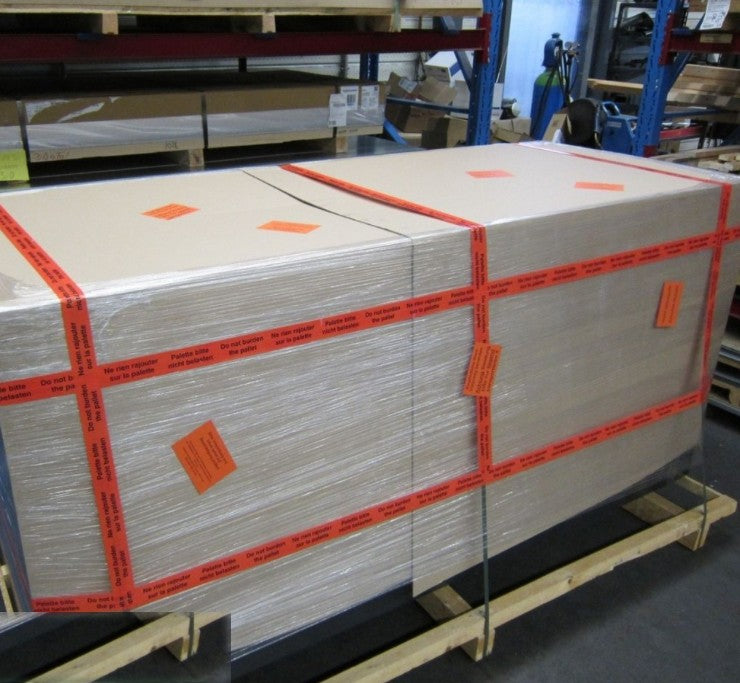
- Delivery: as a single piece, no assembly required, shipped by freight forwarder
- Origin: Made in Germany
Develop the patina faster – with a rust activator
Naturally, it takes about 1.5 to 3 years for the rust patina to develop fully. If you want the warm rust look sooner, you can help things along with a rust accelerator such as the RustIT+ rust activator – the patina then forms in a matter of days instead of years. Here is how easy it is:
- 1. Prepare: The surface must be dry and free of grease and dust. Remove fingerprints with a little methylated spirit and cover sensitive surfaces around the bed.
- 2. Apply: Spray the rust activator evenly onto all visible surfaces – wearing gloves and safety goggles.
- 3. Let it work: The first rust forms within just a few hours. For an even, rich patina, repeat the application after 24 hours – subsequent exposure to rain and sun deepens the color further.
Genuine Corten steel – not „structural steel with a rust look“
- Weather-resistant alloy with copper and chromium – not untreated structural steel St37 or S235.
- A firmly adhering protective patina forms instead of porous, flaking rust.
- No rusting through: decades of service life, virtually maintenance-free.
We explain in detail why this is a technical difference and not just a visual one in our guide Corten steel vs. structural steel St37.
And if you would like to go deeper: our comprehensive raised bed guide takes you from planning through filling to planting.
Would you prefer the classic version with the top edge folded inward? Here is the made-to-measure Corten steel raised bed with inward fold.
Manufacturer:
Kirchberger Metall Onlinevertrieb GmbH
Neunburger Str. 2c
92431 Neunburg v. W. / Seebarn
Germany
Contact:
Email: shop@kirchberger-metall.de
Telephone: +49 (0) 9672 9269110


