
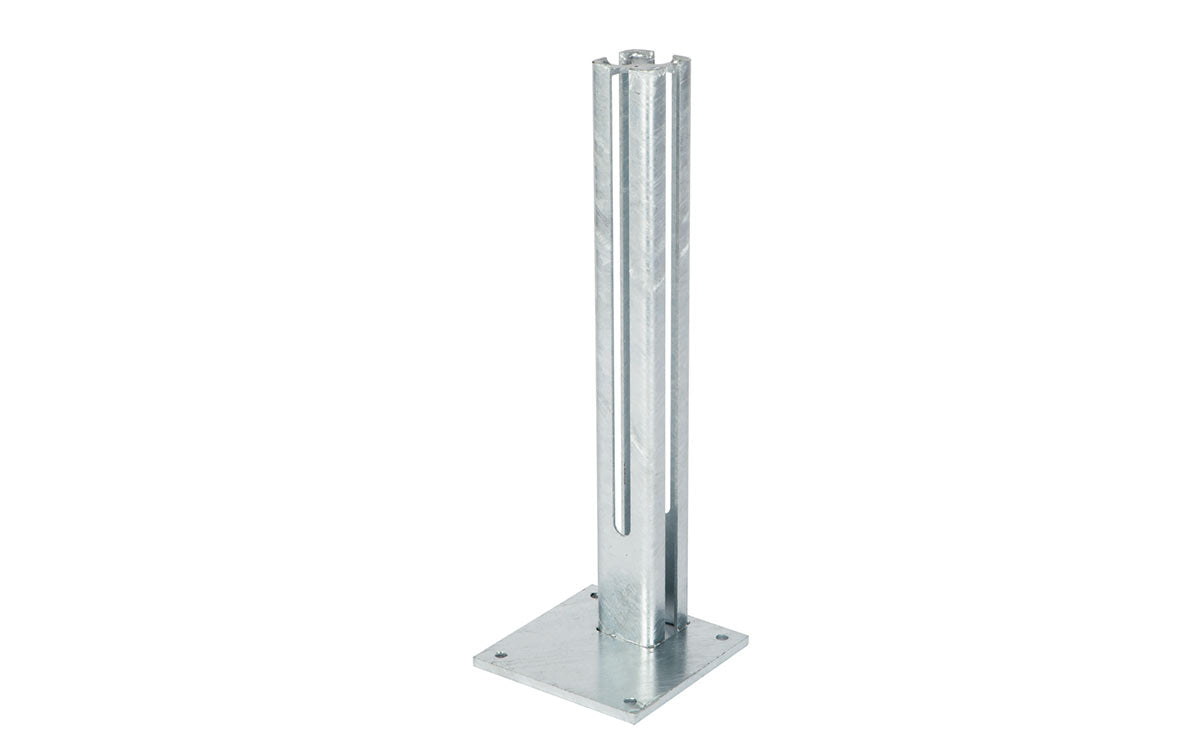
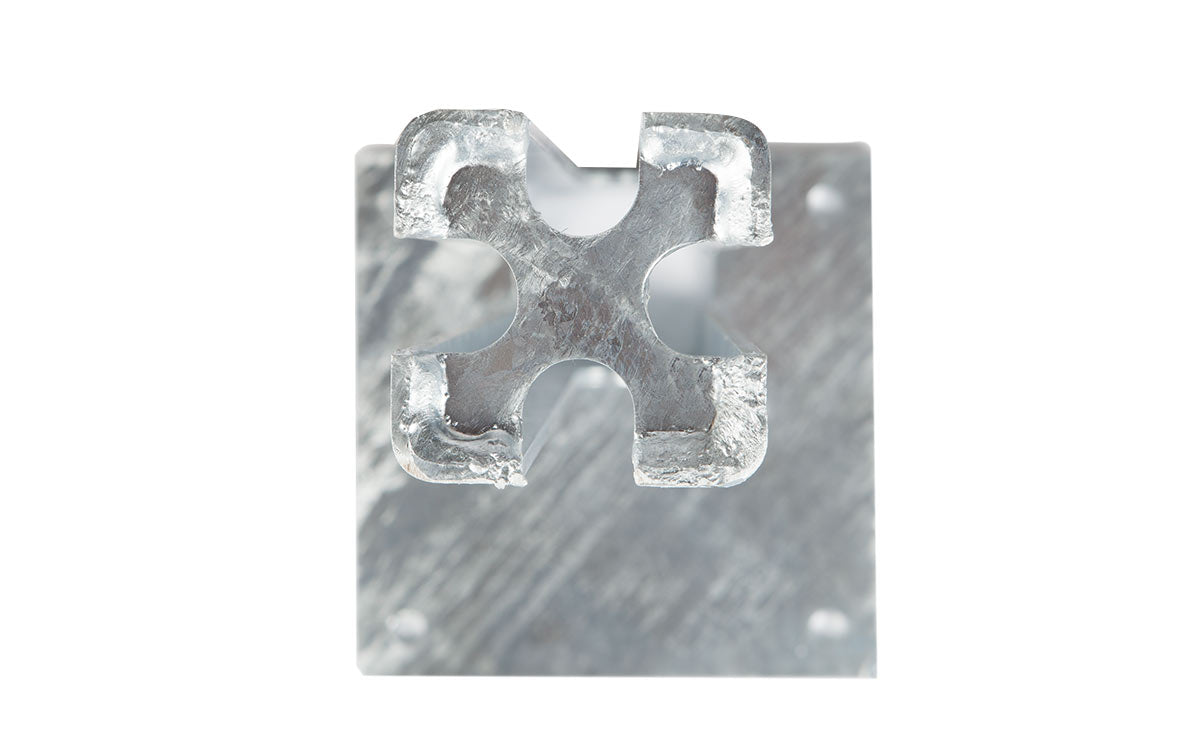
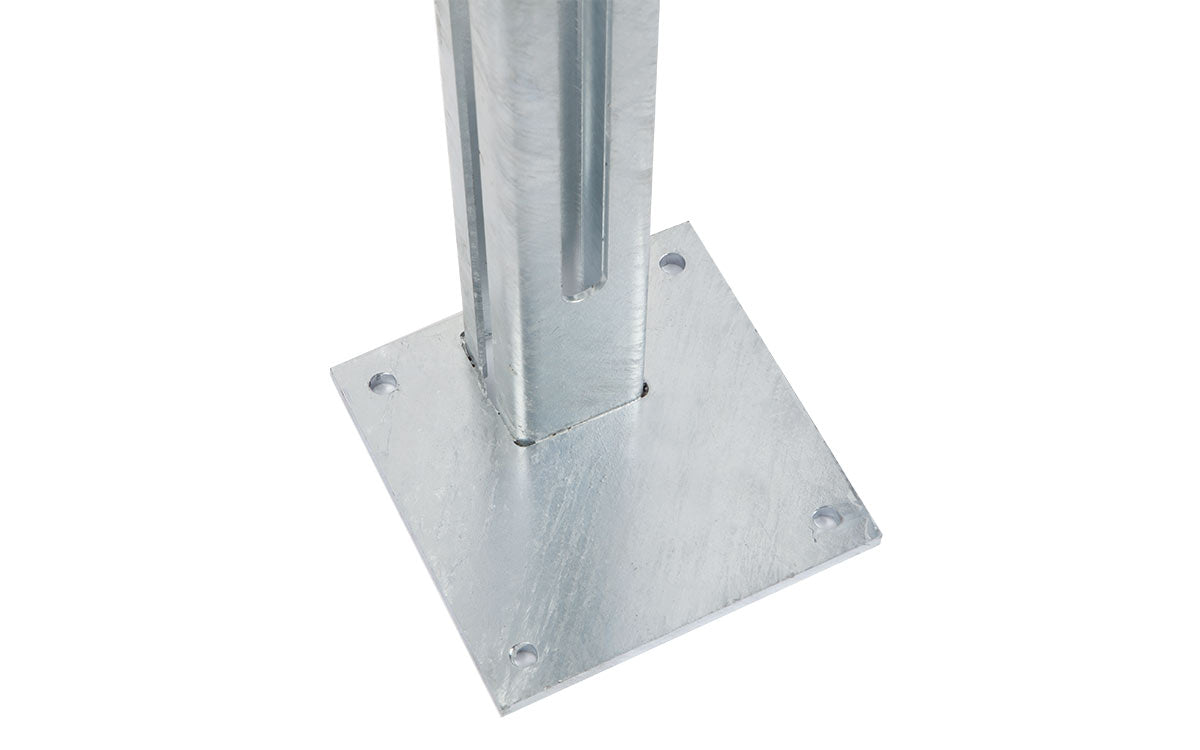
Base Plate for Gate Posts 80 x 80 mm - For Surface Anchoring, Hot-Dip Galvanized
Black Weeks bis 30.11.: bis zu 400 € Rabatt ab 500 € Warenwert StufenGesetzliche Gewährleistung (EU-Hinweis) Ihr Europa
Für Gewerbe und Kommunen: Bis 18.12. bestellen – auf Wunsch stellen wir die Rechnung noch 2026. Eine kurze Nachricht an shop@kirchberger-metall.de genügt.
Surface
Parcel or freight item: plus shipping, free shipping within Germany from €1,000 Shipping info
Spedition/Paketdienst mit Terminankündigung (Avis)
Sie erhalten Ihr Angebot als PDF per E-Mail – in der Regel sofort. Produkt, Ausführung und Menge übernehmen wir unverändert.
Wir haben Ihre Anfrage aufgenommen. Das Angebot erreicht Sie gleich per E-Mail – schauen Sie bitte auch im Spam-Ordner nach.
- Service & Beratung
- Kauf auf Rechnung (B2B)
- Fachbetrieb seit 1955
- Sichere Bestellung mit Käuferschutz


Choose options
Surface
Parcel or freight item: plus shipping, free shipping within Germany from €1,000 Shipping info
Spedition/Paketdienst mit Terminankündigung (Avis)
Sie erhalten Ihr Angebot als PDF per E-Mail – in der Regel sofort. Produkt, Ausführung und Menge übernehmen wir unverändert.
Wir haben Ihre Anfrage aufgenommen. Das Angebot erreicht Sie gleich per E-Mail – schauen Sie bitte auch im Spam-Ordner nach.
- Service & Beratung
- Kauf auf Rechnung (B2B)
- Fachbetrieb seit 1955
- Sichere Bestellung mit Käuferschutz
Base Plate for Gate Posts 80 x 80 mm for Surface Anchoring
A gate post carries a load differently from a fence post. On a fence post the panel pulls evenly, on a gate post there is a leaf that swings open and comes back again every time. The base plate has to transfer this moment into the substrate, and that is why, with a socket height of 610 mm, it is considerably taller than a fence post plate.
It is needed wherever setting in concrete is not possible: on a concrete ceiling, on an existing floor slab, on a strip foundation that is already in place.
Technical Data
- For gate posts 80 x 80 mm
- Dimensions 610 x 200 x 200 mm
- Four holes in the base plate
- For surface anchoring
- Hot-dip galvanized, or hot-dip galvanized and powder-coated in RAL 7016 anthracite grey
Anchors Are Not Included
Special bolt anchors are to be ordered separately. This is not cutting corners in the wrong place but a question of the substrate: concrete, screed over insulation and an old foundation each call for different anchors. You will find suitable anchors under Base Plates, Anchors and Screws. Before drilling, check the thickness and grade of the slab you are anchoring into. A double-leaf gate on a concrete ceiling only 8 cm thick is a case for the structural engineer, not for gut feeling.
Your Benefits
- Socket height of 610 mm takes up the moment of the gate leaf
- Four holes in the base plate
- Hot-dip galvanized, optionally additionally coated in RAL 7016
- For gates where no foundation can be set
Manufacturer:
Kirchberger Metall Onlinevertrieb GmbH
Neunburger Str. 2c
92431 Neunburg v. W. / Seebarn
Germany
Contact:
Email: shop@kirchberger-metall.de
Telephone: +49 (0) 9672 9269110


