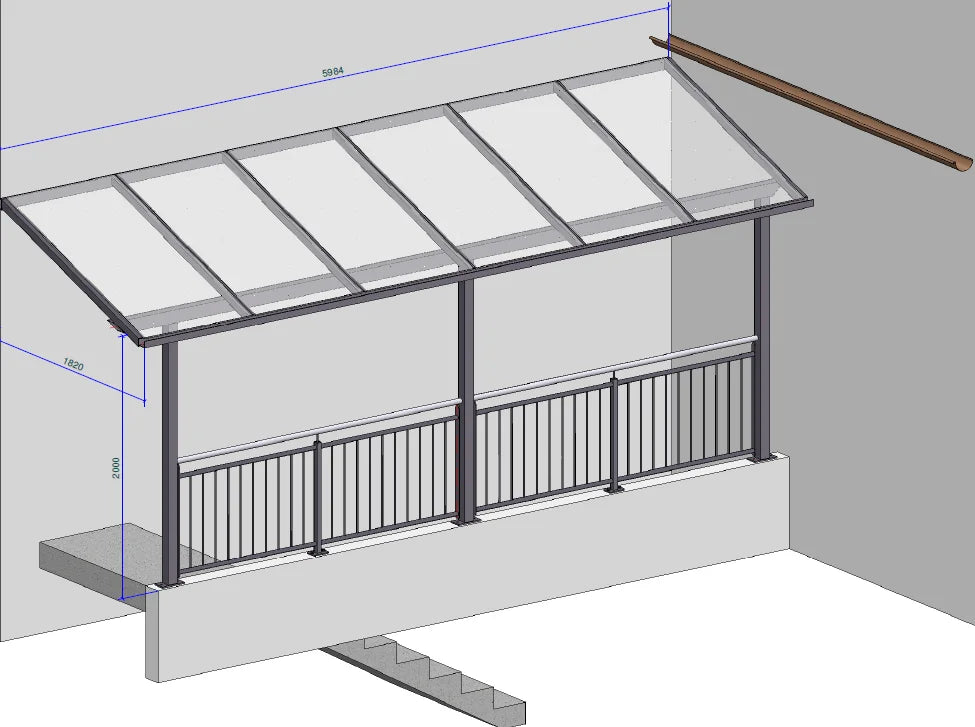


Metal holds our world together—from balconies to bridges. Yet its greatest threat is invisible: corrosion. How can metals be protected for the long term, and which method really stands up to everyday use? Discover the differences between hot-dip galvanizing and electroplating.
Why corrosion protection is crucial in metal construction
Metal structures are robust, but susceptible to rust. Water, oxygen and pollutants take their toll on metals—with costly consequences: unstable structures, extensive repairs and substantial follow-on costs. Surface protection is therefore not just essential; it is an investment in durability and safety.
- Corrosion protection significantly extends the service life of components.
- It sustainably reduces maintenance requirements and repair costs.
- Professional protection contributes to the safety of buildings and facilities.
- Sustainability and preserving value are priorities in every construction project.
Hot-dip galvanizing: A robust shield that lasts for decades
For decades, hot-dip galvanizing has provided highly reliable corrosion protection in metal construction. Prefabricated metal components are immersed in molten zinc at a temperature of around 450°C. The zinc bonds with the steel to form an extremely durable alloy layer.
- Hot-dip galvanizing protects the entire metal surface, including edges and cavities.
- The zinc layer acts both as a barrier and as a so-called sacrificial metal, providing cathodic protection.
- After the process, the component is ready for immediate use: no drying time and no additional coating required.
Advantages of hot-dip galvanizing
A hot-dip galvanized surface offers exceptional resistance to sources of corrosion such as moisture, UV radiation and air pollution. Building materials and structures benefit from long-lasting protection that often lasts for several decades without the need for recoating.
- Durability: Hot-dip galvanized components often last more than 50 years outdoors.
- Self-healing effect: In the event of minor mechanical damage, the cathodic effect continues to protect adjacent areas.
- Sustainability: The hot-dip galvanized layer can be recycled at the end of the product’s life cycle.
- Low maintenance: Once applied, it requires hardly any inspections or repairs.
Applications for hot-dip galvanizing
Structures that are permanently exposed to wind and weather benefit particularly from hot-dip galvanizing.
- Balcony and railing structures
- Bridges and steel structures
- Fences, gates and street furniture
- Support columns and load-bearing structures in public spaces
Protection extends into even the smallest corners, ensuring the highest level of safety and value retention.
Electroplated zinc: A detailed finish for interiors
Electroplating is based on an electrochemical process. The part to be protected is immersed in a solution containing zinc ions and connected to direct current as a cathode; the zinc is deposited precisely on the surface.
- The process produces very thin, even coatings and is particularly suitable for thin-walled or intricately shaped small parts.
- The surface has a glossy finish and is well suited to decorative indoor applications.
Advantages of electroplating
This method offers numerous benefits, especially when appearance or intricately detailed components are a priority.
- Smooth, attractive finish: Ideal for visible components in furniture or equipment manufacturing.
- Precise control: The zinc layer can be adjusted exactly as required.
- Well suited to small fasteners, screws and fittings.
- Subsequent painting or powder coating is easy.
Limitations of electroplating
When electroplated parts are exposed to severe stress or the elements over extended periods, the process quickly reaches its limits.
- Thin coatings (usually 5–25 micrometers) offer only limited outdoor corrosion protection.
- Edges and corners are less reliably protected, as the zinc layer is often thinner in these areas.
- Maintenance requirements are higher than for hot-dip galvanizing.
Hot-dip galvanizing vs. electroplating: A direct comparison
Choosing the right corrosion protection depends on various factors. The intended use, exposure, desired appearance and service life are key considerations.
- For durable, low-maintenance outdoor construction, hot-dip galvanizing is the safe choice.
- For decorative applications or indoor use, electroplating delivers attractive results.
- For protecting complex internal contours or hollow sections, hot-dip galvanizing provides comprehensive coverage.
Protection period and durability
The service life of a galvanized coating varies considerably depending on the process and the environment in which it is used.
- Depending on the coating thickness and environment, hot-dip galvanizing can provide protection for up to 70 years.
- Electroplated parts can show the first signs of corrosion after just a few years outdoors if they are not given an additional coating.
Appearance and post-treatment
- Those who value a glossy or visually flawless finish often choose electroplating. However, the surface can wear quickly under mechanical stress.
- Hot-dip galvanized surfaces have a rougher texture and a characteristic zinc sheen that becomes duller over time. For a particular color finish, a powder coating can be applied (“duplex system”).
Cost-effectiveness and sustainability
Both processes are industrial production methods suitable for projects of various sizes. However, hot-dip galvanizing offers clear advantages for long-lasting construction.
- Lower life-cycle costs thanks to long service life and virtually maintenance-free use.
- Zinc is recyclable, and galvanized components can also be recycled when structures are dismantled.
When should you choose each process?
The choice between hot-dip galvanizing and electroplating depends on the component’s intended use and the desired properties.
- For load-bearing outdoor structures, bridges, facades and railings, hot-dip galvanizing is unbeatable in terms of protection and service life.
- For connection hardware, screws or components subject to low mechanical stress and limited exposure, electroplating can offer an attractive, cost-effective result.
- Aesthetic considerations and any planned subsequent coatings should also be taken into account.
If low maintenance costs, safety and long-lasting protection are priorities, hot-dip galvanizing is recommended. For indoor assemblies or decorative parts, electroplating is a good option, with appearance taking center stage.
Conclusion
Hot-dip galvanizing provides robust, decades-long corrosion protection and is the ideal solution for metal structures exposed to the elements. For decorative applications or intricately detailed parts, electroplating may be the right choice. Seek tailored advice for your project and make the best choice for sustainable metal protection.