Raised beds: Ergonomics and optimized growing conditions in horticulture
A raised bed is an above-ground growing area that can be used in traditional gardens as well as in urban spaces such as terraces, balconies, or paved courtyards. Besides aesthetically structuring the outdoor area, raised beds offer significant horticultural advantages: Due to their elevated position, the substrate warms up faster than in a ground-level bed, extending the growing season. Furthermore, the plants are better protected from weeds, as natural seed dispersal primarily occurs near the ground. Kirchberger Metall manufactures premium-quality raised beds "Made in Germany," designed for maximum durability and functional ergonomics.
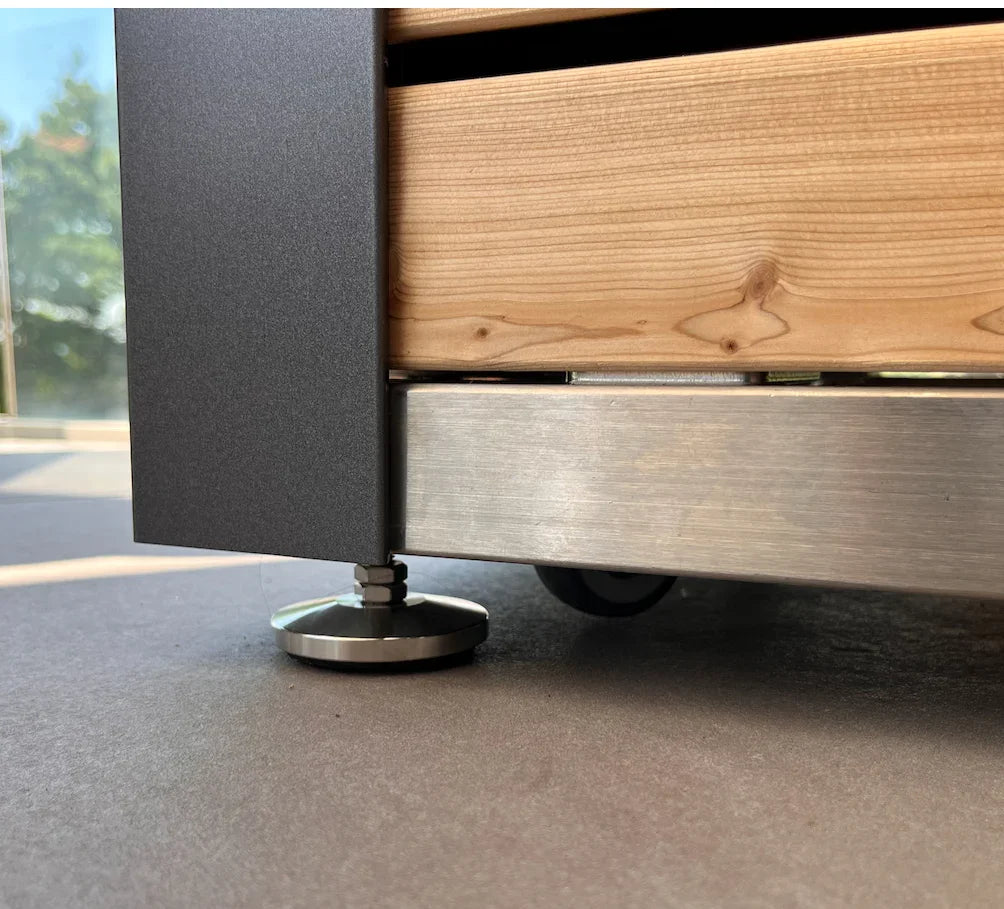
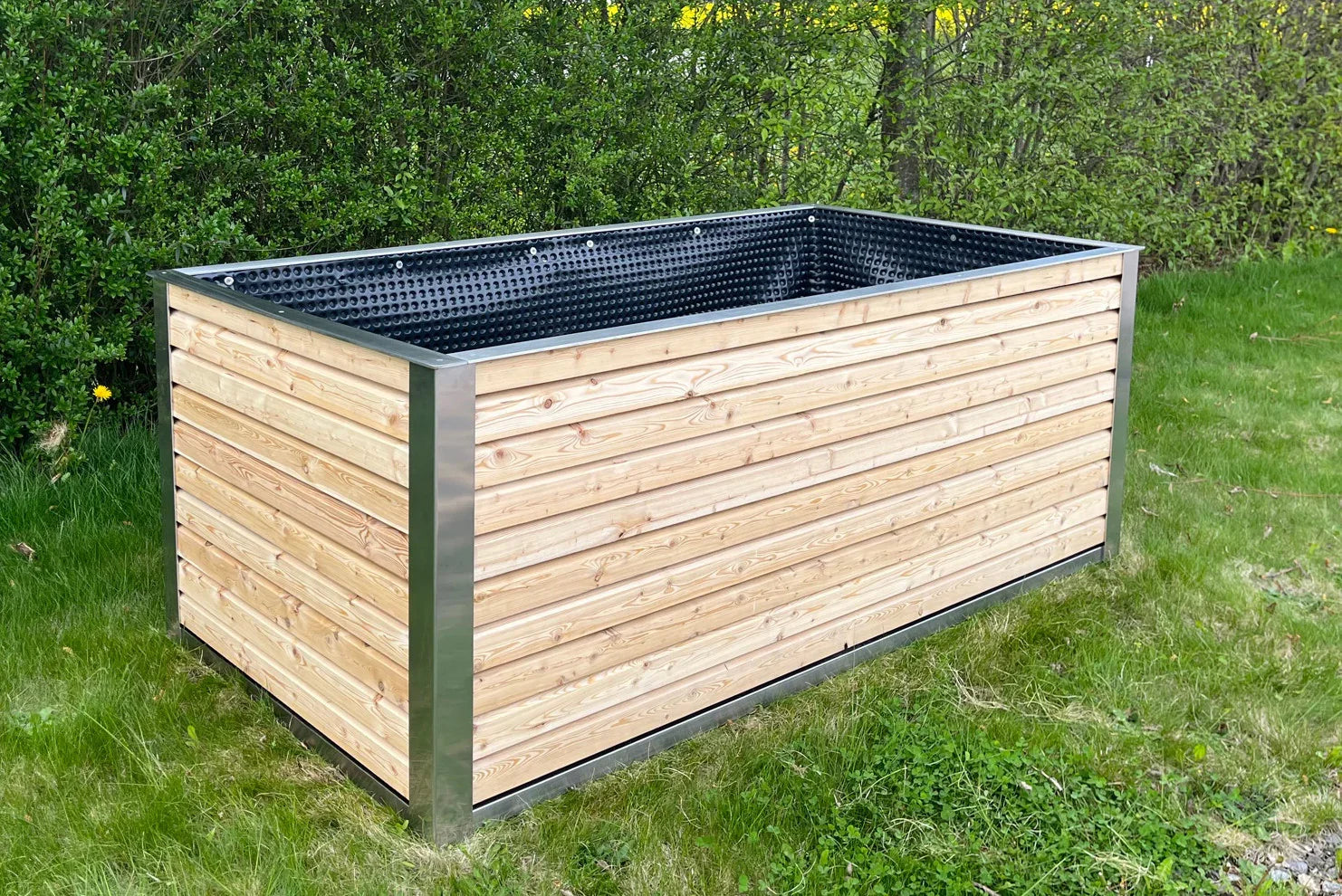
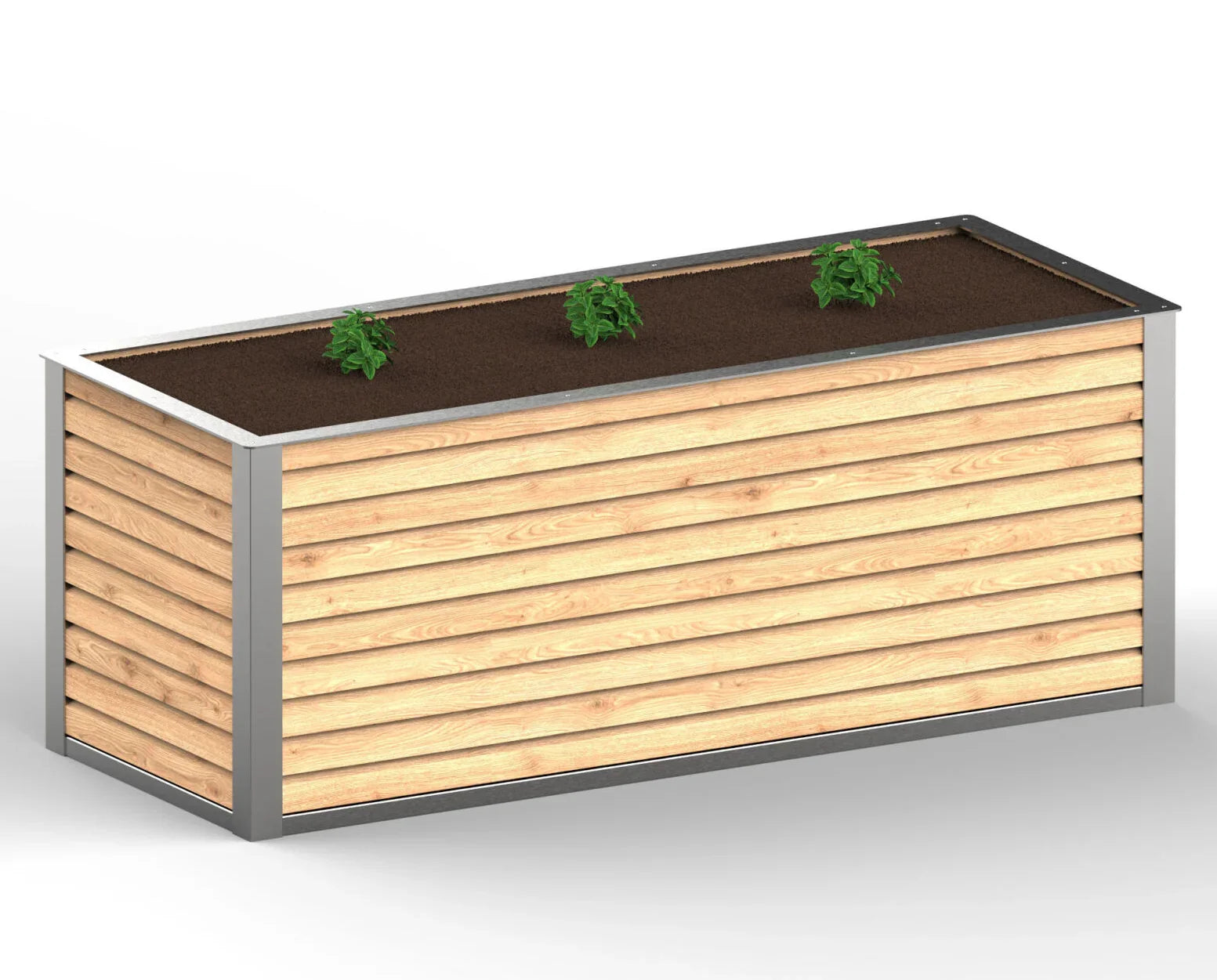
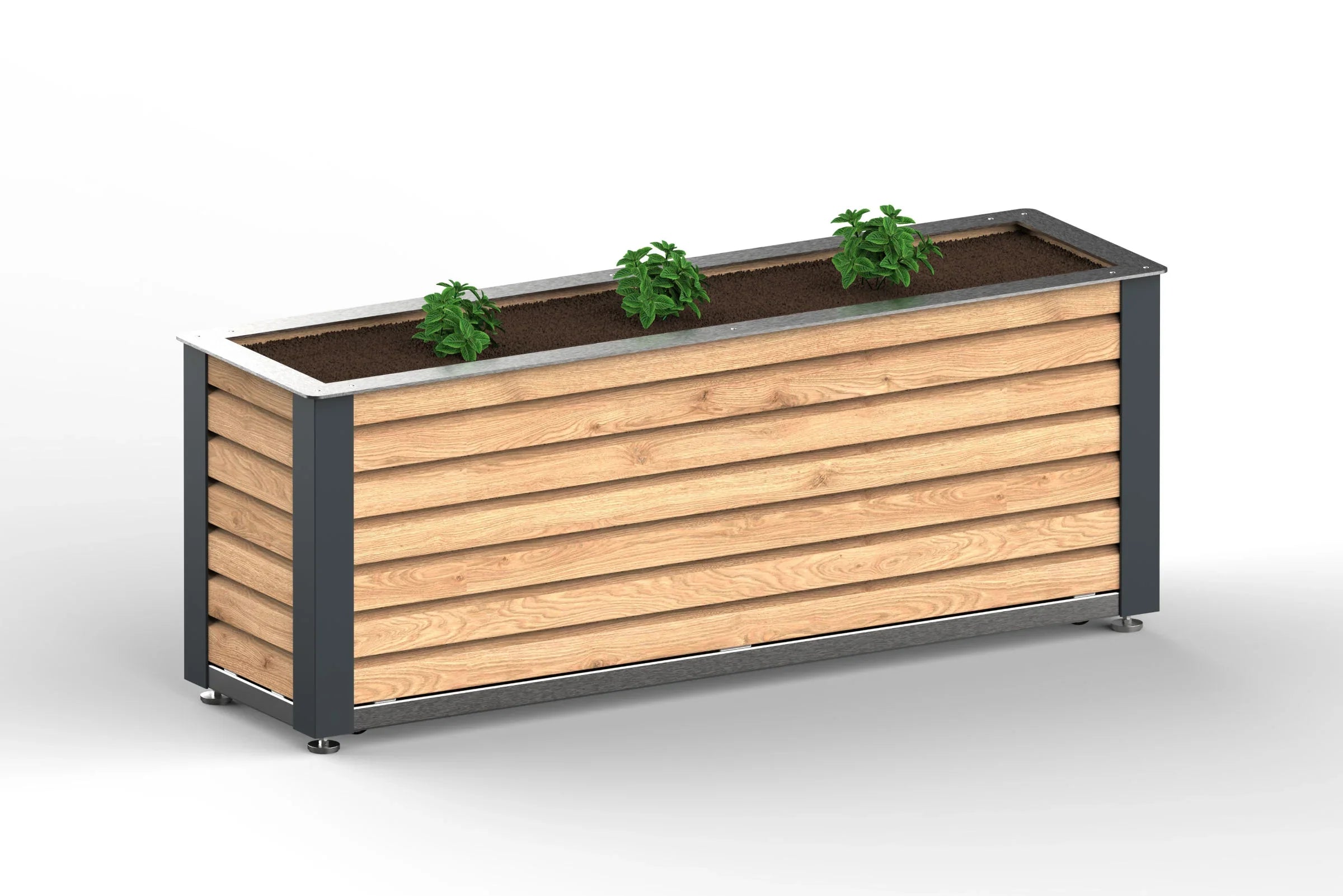
Stainless steel frame system with larch wood infill
Traditional raised beds made of pure wood often suffer from premature rotting due to direct contact with the ground and waterlogging. Kirchberger Metall's innovative system solves this problem through an intelligent design.Material combination:
- Stainless steel support frame:The sturdy frame made of stainless steel forms the structural base. It serves as a protective barrier between the damp soil and the wooden cladding.
- Larch wood filling:Larch wood is naturally weather-resistant due to its high resin content. By integrating the lower boards into the stainless steel frame, they have no direct contact with ground moisture, which significantly extends the wood's lifespan.
- Aesthetics:Optional corner trims ensure concealed mounting of the connecting elements, creating a modern, flush look without visible screws.
Ergonomics and accessibility
Working on a raised garden bedrelievedtheBackand the joints, as the strenuous bending is eliminated. This makes gardening accessible again for older people or people with physical limitations. With appropriate planning for accessibility underneath, raised beds can also be designed to be barrier-free for wheelchair users. The raised level allows for aprecise careThe cultures are on an equal footing, and it facilitates the harvesting of herbs and vegetables.
Technical structure and layer system
For optimal nutrient supply and aeration of the roots, the structure inside the raised bed should be systematic:
- Rodent protection:A fine-mesh wire grid on the floor prevents voles from entering.
- Drainage layer:Large branches and twigs ensure the necessary air circulation in the lower area.
- Filler layer:This is followed by layers of garden waste such as leaves and grass clippings, which release heat and valuable nutrients as they decompose.
- Planting layer:The top layer consists of high-quality humus or garden soil (at least 30 cm thick).
Maintenance and longevity
To avoid disturbing the established microfauna and soil layers, a raised bed should not be dug over. It is sufficient to replenish the depleted substrate on the surface annually. After approximately five to seven years, the decomposition process of the lower layers is complete; at this point, it is recommended to rebuild the raised bed. Thanks to the high-quality materials from Kirchberger Metall, the outer structure remains intact for many cycles.dimensionally stableand visually flawless.